Categories Plumbing

How Long Does a Water Heater Last?

Your water heater works hard every single day. It powers hot showers, clean dishes, and warm laundry without much thought from you. Yet many homeowners wonder about water heater lifespan only after problems appear.

Understanding how long your unit should last helps you plan ahead. Therefore, you can avoid cold showers and surprise replacements. At T.C.R. Rooter & Plumbing, we help Raleigh Triangle families protect their plumbing investments every day.

This guide breaks down what to expect from your water heater. Additionally, we share signs of trouble and tips to extend its life. Let’s dive in.

Average Water Heater Lifespan Explained

Most water heaters last somewhere between eight and fifteen years. However, the exact range depends on the type you own. Tank and tankless models age very differently.

Traditional tank water heaters typically last around ten to twelve years. On the other hand, tankless units often run fifteen to twenty years. As a result, many homeowners choose tankless for long-term value.

Tank Water Heaters

Tank models store heated water in a large reservoir. Because of this, sediment builds up over time. That sediment slowly wears down the tank from the inside.

Most tank units serve a family well for over a decade. Still, hard water can shorten that timeline. Therefore, regular maintenance matters a lot.

Tankless Water Heaters

Tankless heaters warm water on demand instead of storing it. As a result, they avoid much of the corrosion tanks face. Many last nearly twenty years with proper care.

These units cost more upfront. However, their longer lifespan and energy savings often balance that out. Moreover, they free up valuable space in your home.

What Affects Water Heater Lifespan?

Several factors shape how long your water heater lasts. Some you control, while others depend on your home. Understanding them helps you get the most value.

Water Quality in the Raleigh Triangle

Water quality across North Carolina varies by community. For example, homes in Apex and Wake Forest may face different mineral levels than Durham. Hard water leaves behind sediment and scale.

That buildup forces your heater to work harder. As a result, parts wear out faster. Furthermore, scale reduces heating efficiency over time.

You can learn more about local water quality through the EPA drinking water resources. This information helps you understand what flows through your pipes. Then you can take smart steps to protect your system.

Maintenance Habits

Regular maintenance extends water heater lifespan dramatically. Flushing the tank removes harmful sediment. Additionally, checking the anode rod prevents corrosion.

Many homeowners skip these tasks entirely. However, neglect leads to early failure. Therefore, a yearly checkup pays off in the long run.

Installation Quality

A poorly installed unit struggles from day one. Meanwhile, professional installation sets the stage for years of service. Proper sizing and venting matter greatly.

Our licensed technicians install every unit correctly the first time. Because of this, your heater performs at its best. Contact the TCR Plumbing team to discuss your installation needs.

Signs Your Water Heater Is Failing

Water heaters rarely fail without warning. Instead, they show clear signs first. Recognizing these clues saves you from cold surprises.

Watch for these common warning signs:

  • Rusty water coming from hot taps
  • Strange noises like rumbling or popping
  • Water pooling around the base of the tank
  • Inconsistent temperatures during showers
  • Higher energy bills without an obvious cause

Any of these signals deserve attention. Therefore, act quickly when you notice them. Early repairs often prevent costly water damage.

Age as a Warning Sign

Sometimes age alone signals trouble. If your unit passes the ten-year mark, stay alert. Older heaters fail with little notice.

You can check the manufacture date on the label. Then compare it to the typical lifespan. As a result, you can plan a replacement before disaster strikes.

Leaks Demand Fast Action

A leaking water heater poses real risks. Water damage spreads fast in homes across Cary and Fuquay-Varina. Mold and structural problems can follow.

Never ignore standing water near your unit. Instead, call a professional right away. Our team offers 24/7 emergency service throughout the Triangle.

How to Extend Your Water Heater Lifespan

Good habits add years to your water heater. Fortunately, most steps are simple. A little effort goes a long way.

Flush the Tank Annually

Sediment settles at the bottom of tank heaters. Flushing removes this buildup once a year. As a result, your unit runs cooler and lasts longer.

This task takes some know-how. Therefore, many homeowners schedule professional service. We handle flushes safely and quickly.

Check the Anode Rod

The anode rod attracts corrosion away from the tank. Over time, it wears down completely. Then the tank itself begins to rust.

Replacing this rod is affordable and effective. Moreover, it can add years to your heater’s life. We inspect it during routine visits.

Adjust the Temperature

Setting the temperature too high stresses your unit. Additionally, it wastes energy and raises bills. A moderate setting protects the system.

A comfortable, efficient range works for most families. Lower settings also reduce scald risks. Finally, they slow mineral buildup inside the tank.

Install a Water Softener

Hard water shortens water heater lifespan across the Triangle. A water softener reduces minerals before they enter the tank. Because of this, scale builds up far slower.

Softeners benefit your whole plumbing system. In addition, they protect faucets, appliances, and pipes. Many Raleigh homeowners find them worth the investment.

Repair or Replace? Making the Right Call

Eventually, every water heater needs a decision. Should you repair it or replace it? Several factors guide that choice.

Consider replacement when your unit shows these signs:

  • It has passed its expected lifespan
  • Repairs cost a large share of replacement
  • The tank itself is leaking
  • Energy bills keep climbing
  • Hot water runs out too fast

Minor issues often warrant simple repairs. For example, a faulty valve or thermostat is an easy fix. However, a corroded tank usually means replacement.

Upgrading to Tankless

Many homeowners upgrade to tankless during replacement. These units last longer and save space. Furthermore, they deliver endless hot water on demand.

Tankless models suit busy families well. Meanwhile, they cut energy waste over the years. Schedule service to explore your tankless options today.

Why Professional Service Matters

DIY plumbing can lead to costly mistakes. Water heaters involve gas, electricity, and pressure. Therefore, professional help keeps you safe.

Our background-checked technicians bring over thirty years of experience. We are licensed, bonded, and insured for your peace of mind. Additionally, we hold an A+ BBB rating.

We serve homeowners and businesses across Raleigh, Apex, and Zebulon. Moreover, we back every job with a full guarantee. You can trust our team for honest, fair service.

Frequently Asked Questions

How long does a water heater last on average?

Most tank units last ten to twelve years. Tankless models often run fifteen to twenty years. Regular maintenance extends both timelines.

Can I extend my water heater lifespan myself?

Yes, basic habits help a lot. For example, adjusting the temperature is simple. However, flushing and rod checks are best left to professionals.

Does hard water affect my water heater?

Absolutely. Hard water leaves mineral deposits inside the tank. As a result, your unit wears out faster without a softener.

When should I replace instead of repair?

Replace when the tank leaks or repairs cost too much. Also consider age. Units past their lifespan rarely justify repairs.

Is tankless worth the upgrade?

For many families, yes. Tankless units last longer and save energy. Furthermore, they provide endless hot water.

Protect Your Hot Water Today

Understanding water heater lifespan helps you plan with confidence. Therefore, you avoid cold showers and emergency stress. Smart maintenance keeps your system running for years.

Are you noticing warning signs in your home? Don’t wait until the problem grows. Our team is ready to help across the Raleigh Triangle.

Contact T.C.R. Rooter & Plumbing today to schedule service or discuss a replacement. We proudly serve Raleigh, Apex, Wake Forest, and nearby communities. Let our experienced professionals keep your hot water flowing.

Categories Plumbing

Why Sewer Line Inspections Matter Before Buying a Home

Buying a home is exciting. However, hidden plumbing problems can turn that excitement into stress. A sewer inspection home buying step protects you from costly surprises after closing.

Many buyers focus on roofs, foundations, and kitchens. Meanwhile, the sewer line stays out of sight and out of mind. Therefore, it often gets overlooked during a standard home inspection.

At TCR Plumbing, we serve homeowners across the Raleigh Triangle. As a result, we have seen what a missed sewer issue can cost. This guide explains why a sewer line check matters before you buy.

What a Sewer Line Inspection Actually Checks

A sewer line carries waste from your home to the city main or septic system. When it fails, the repair bill can be high. Because of this, an inspection is smart due diligence.

During the process, a plumber feeds a small camera into the line. Then, they record the condition of the pipe from inside. Therefore, you see exactly what you are buying.

What the Camera Reveals

The video shows problems that a visual home inspection cannot catch. For example, it spots cracks, blockages, and root damage. Additionally, it reveals pipe material and sagging sections.

  • Tree root intrusion growing into the pipe joints
  • Cracks or collapsed sections in the line
  • Grease and debris buildup that slows drainage
  • Bellied pipes that sag and collect waste
  • Old or outdated pipe materials nearing the end of life

A standard inspection skips these hidden issues. However, a camera inspection catches them early. As a result, you can negotiate or walk away with confidence.

Why Triangle-Area Homes Need Extra Attention

The Raleigh Triangle includes many older neighborhoods. Meanwhile, it also has fast-growing newer suburbs. Both situations create unique sewer risks for buyers.

In Raleigh and Durham, mature trees line many streets. Therefore, root intrusion is a common problem. Roots seek moisture and slip into tiny pipe cracks over time.

Older Homes and Aging Pipes

Older homes in established areas may have outdated piping. For example, clay or cast iron pipes degrade with age. Additionally, some homes still contain polybutylene plumbing, which can fail.

Communities like Wake Forest and parts of Raleigh feature decades-old construction. As a result, the sewer lines may be near the end of their service life. A camera inspection confirms their true condition.

Newer Construction Is Not Immune

Buyers often assume new homes have no sewer worries. However, that assumption can be costly. In fast-developing areas like Apex, Cary, and Fuquay-Varina, construction debris sometimes ends up in lines.

Furthermore, poor installation can cause bellies or misaligned joints. Therefore, even a recently built home deserves a quick check. A small inspection now prevents a big repair later.

The Real Cost of Skipping an Inspection

A sewer repair is not a minor fix. Often, it requires digging up the yard. As a result, the cost and disruption can be significant.

Imagine closing on a home in Zebulon or Durham. Then, the line backs up a month later. Because of this, you face an unexpected and stressful expense.

On the other hand, an inspection before closing changes everything. You learn the truth ahead of time. Therefore, you can plan, negotiate, or choose another property.

How an Inspection Protects Your Negotiation

Knowledge gives buyers power at the negotiating table. For example, you can ask the seller to repair the line. Alternatively, you can request a price reduction.

  • Request that the seller fix problems before closing
  • Negotiate a lower purchase price to cover repairs
  • Ask for a repair credit at closing
  • Walk away from a costly hidden problem

Without proof, sellers rarely budge. However, a recorded video makes your case clear. As a result, both sides can act on facts instead of guesses.

Signs That Should Raise a Red Flag

Sometimes warning signs appear during a showing. Therefore, stay alert as you tour each property. These clues often point to sewer trouble.

  • Slow drains in sinks, tubs, or showers
  • Gurgling sounds from toilets or drains
  • Foul odors near drains or in the yard
  • Soggy or sunken spots in the lawn
  • Frequent backups mentioned in disclosures

Any of these signs deserves a closer look. However, even a clean-looking home can hide issues. Therefore, an inspection remains the safest choice.

Trust Professionals With Proven Experience

Sewer inspections require the right tools and training. Because of this, you want a trusted local team. TCR Plumbing has served the Triangle since 1993.

Our technicians are background-checked and drug-tested. Moreover, we are licensed, bonded, and insured. We also hold an A+ BBB rating and back our work fully.

To learn more about our services, visit the TCR Plumbing website. There, you can explore your options and request service. Additionally, our team answers questions with honesty and respect.

How the Inspection Process Works

The process is simple and fast. First, we locate the cleanout access point. Then, we insert the camera into the sewer line.

Next, we guide the camera through the pipe. Meanwhile, we record live video of the interior. Finally, we review the footage with you.

What You Receive Afterward

You get a clear picture of the pipe’s condition. Furthermore, we explain any problems in plain language. As a result, you can make a confident decision.

For trusted guidance on home maintenance, the EPA septic care resource offers helpful background. Additionally, it explains how systems work and why upkeep matters. Therefore, it pairs well with a professional inspection.

Sewer Inspections for Commercial Buyers Too

Sewer inspections are not just for homeowners. Commercial buyers also benefit greatly. After all, a business cannot afford plumbing downtime.

Restaurants, offices, and retail spaces rely on working drains. Therefore, a pre-purchase inspection makes good business sense. In addition, it protects your investment from costly surprises.

Across the Triangle, commercial properties vary widely in age. As a result, sewer conditions differ from one building to the next. A camera check removes the guesswork.

Frequently Asked Questions

Is a sewer inspection part of a standard home inspection?

No, it usually is not included. A standard inspection covers visible systems. However, the sewer line stays hidden underground, so it needs a separate camera check.

How long does a sewer inspection take?

Most inspections take under an hour. However, the time varies with pipe length and access. Therefore, a plumber can give you an estimate beforehand.

Should I inspect the sewer line on a brand-new home?

Yes, an inspection is still wise. Construction debris and poor installation can cause issues. As a result, even new homes benefit from a quick check.

What if the inspection finds a problem?

You gain valuable information and leverage. Therefore, you can negotiate repairs or a price change. Alternatively, you can decide the home is not right for you.

Who should I call for a sewer inspection in the Triangle?

Choose a licensed, experienced local plumber. TCR Plumbing serves Raleigh, Apex, Cary, and beyond. Moreover, we offer 24/7 emergency service when you need it.

Protect Your Investment Before You Close

A home is one of your biggest purchases. Therefore, you should know what lies beneath the surface. A sewer inspection home buying step gives you peace of mind.

Whether you buy in Raleigh, Durham, or Wake Forest, the value is clear. You avoid surprises and gain negotiating power. As a result, you protect your money and your time.

Ready to move forward with confidence? Contact the TCR Plumbing team to discuss your plumbing concerns. Then, schedule service and let our experienced technicians help you buy with certainty.

Categories Plumbing

How to Know If You Need Sewer Replacement

Your sewer line works quietly underground every single day. However, when it fails, the signs can disrupt your whole home. Many Raleigh homeowners wonder when a repair is enough and when sewer line replacement becomes the smarter choice.

At TCR Plumbing, we have helped families across the Triangle answer that exact question. Therefore, we want to share the warning signs that matter most. This guide will help you understand your options clearly.

Below, we explain the symptoms, the causes, and the next steps. Additionally, we cover what homeowners in Apex, Cary, and Wake Forest often experience. Let’s start with the basics.

What Does a Sewer Line Actually Do?

Your sewer line carries waste away from your home. It connects to the city main or a septic system. As a result, every drain in your house depends on it.

When the line is healthy, you barely notice it. However, age and damage can change that fast. Older Raleigh neighborhoods often have clay or cast iron pipes underground.

These materials wear down over decades. Because of this, replacement sometimes becomes unavoidable. Knowing the early signs gives you time to plan.

Why Sewer Problems Get Worse Over Time

Small cracks rarely stay small. Tree roots, soil shifts, and corrosion all add stress. Meanwhile, water keeps flowing through the damaged pipe.

Over time, the damage spreads. Therefore, early action often saves money. Ignoring symptoms usually leads to a bigger repair later.

7 Warning Signs You May Need Sewer Line Replacement

Some signs point to a simple clog. Others suggest deeper trouble. Below, we list the most common red flags we see in Triangle homes.

  • Frequent backups in multiple drains at once
  • Slow drains throughout the entire house
  • Gurgling sounds from toilets or sinks
  • Sewage odors indoors or in the yard
  • Soggy patches or lush green spots in the lawn
  • Foundation cracks or sudden settling
  • Recurring clogs that return after cleaning

One sign alone may not mean replacement. However, several signs together often do. As a result, a professional inspection is the best next step.

When Backups Affect the Whole House

A single slow drain is usually local. On the other hand, backups in several fixtures suggest a main line issue. For example, a toilet that bubbles when you run the washer points downstream.

This pattern means the blockage sits in your sewer line. Therefore, you should call a plumber quickly. Multiple-drain problems rarely fix themselves.

Yard Clues You Should Not Ignore

Your lawn can reveal hidden damage. A broken sewer line leaks nutrients into the soil. Because of this, grass above the leak may grow faster and greener.

Soggy ground without rain is another warning. Additionally, foul smells outdoors signal a cracked pipe. Homeowners in Fuquay-Varina and Durham see these signs often.

Common Causes of Sewer Line Failure in the Triangle

North Carolina soil and tree growth create unique challenges. Therefore, understanding local causes helps you stay ahead. Here are the issues we see most.

Tree Root Intrusion

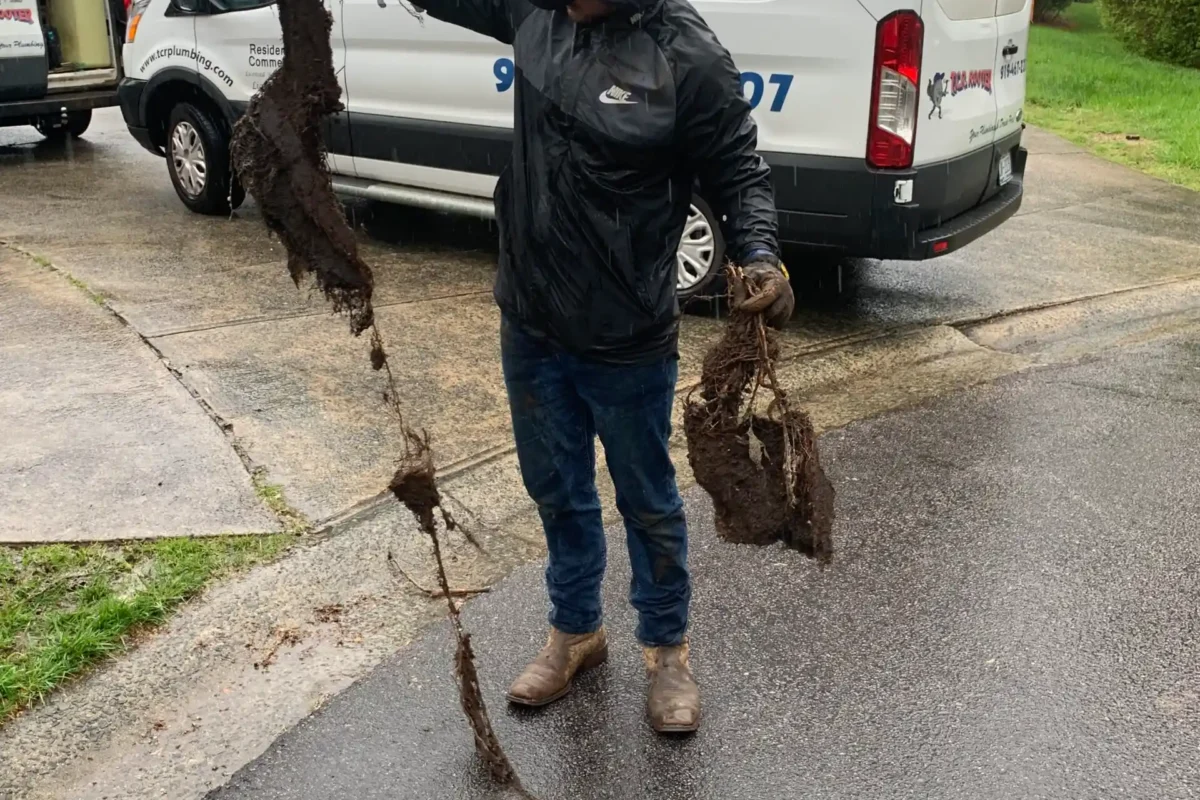
The Triangle is full of mature trees. Roots seek water and find tiny cracks in pipes. Then they grow inside and block the flow.

Roots can crush older clay pipes completely. As a result, replacement often becomes necessary. Hydro jetting may help short term, but it is not always a permanent fix.

Aging Pipe Materials

Many homes built decades ago used clay or cast iron. These materials corrode and crack over time. Furthermore, some older homes still have outdated piping.

If your home predates the 1990s, your line may be aging out. However, only an inspection confirms the condition. We use in-line cameras to see inside the pipe.

Ground Shifts and Bellied Pipes

Soil settles and shifts over the years. This movement can cause a pipe to sag. We call this a “bellied” pipe.

A belly traps waste in one spot. As a result, clogs return again and again. In that case, replacement restores proper slope and flow.

Repair or Replace: How to Decide

Not every sewer problem requires full replacement. Sometimes a spot repair solves the issue. However, certain conditions tip the scale toward replacement.

Consider replacement when damage is widespread. Also consider it when the pipe is old and failing repeatedly. Repairing the same line over and over rarely pays off.

Signs a Repair Will Work

  • Damage is limited to one small section
  • The rest of the pipe looks healthy on camera
  • The problem is a single clog or minor crack

In these cases, a targeted fix often works well. Therefore, you avoid the larger cost of replacement. A camera inspection guides this decision.

Signs Replacement Makes More Sense

  • Multiple cracks or collapses along the line
  • Heavy root intrusion throughout the pipe
  • Repeated backups despite past repairs
  • Bellied or sagging sections

When these issues stack up, replacement protects your home. Moreover, a new line gives you decades of reliable service. The EPA’s guidance on home wastewater systems explains why a sound system matters for your property and health.

How Professionals Diagnose Sewer Problems

Guessing is never a good plan with sewer lines. Therefore, we rely on proven tools. A clear diagnosis saves you time and money.

In-Line Camera Inspection

We feed a waterproof camera into your sewer line. Then we watch the footage in real time. This shows cracks, roots, and blockages clearly.

Because of this, you see the actual problem. No guessing is involved. The camera also pinpoints the exact location of the damage.

Locating the Damage Accurately

Once we find the issue, we mark its location. As a result, any digging stays precise and minimal. Accurate location work protects your landscaping and driveway.

Our technicians are licensed, background-checked, and drug-tested. Therefore, you can trust the people working on your property. We serve homes from Raleigh to Zebulon with the same care.

What to Expect During Sewer Line Replacement

Replacement sounds intimidating, but modern methods help. First, we inspect and confirm the problem. Next, we discuss your options openly.

Then we plan the work to limit disruption. Finally, we test the new line before finishing. We back all work with a 100% guarantee.

Traditional vs. Trenchless Methods

Traditional replacement involves digging a trench. This method works well in many situations. However, it can disturb your yard more.

Trenchless methods reduce digging significantly. As a result, they protect lawns, patios, and driveways. The best method depends on your specific line and soil.

Planning Around Your Home or Business

We know plumbing problems disrupt daily life. Therefore, we work efficiently and communicate clearly. Commercial clients especially need fast, low-impact solutions.

We schedule work to fit your needs. Additionally, our 24/7 emergency service covers urgent failures. You never have to face a sewer crisis alone.

How to Prevent Sewer Line Problems

Prevention beats replacement every time. Fortunately, a few habits go a long way. Here are simple steps homeowners can follow.

  • Avoid flushing wipes, grease, or paper towels
  • Schedule periodic camera inspections for older homes
  • Watch for slow drains and act early
  • Keep large trees away from sewer line paths
  • Address small clogs before they grow

These steps reduce your risk. However, no pipe lasts forever. Regular maintenance helps you plan instead of panic.

Why Local Knowledge Matters

Triangle soil, trees, and home ages create specific patterns. Therefore, a local plumber understands your risks better. We have served Raleigh and Apex since 1993.

Our 30-plus years of experience guide every recommendation. Because of this, you get advice tailored to your area. Want help reviewing your situation? Contact the TCR Plumbing team to discuss your plumbing issue.

Frequently Asked Questions

How long does a sewer line last?

It depends on the pipe material and soil. Many older lines last several decades. However, clay and cast iron eventually wear out.

Can tree roots really break a sewer pipe?

Yes, roots are a common cause of failure. They enter through tiny cracks and grow inside. Over time, they can crush the pipe completely.

Is sewer line replacement always messy?

Not anymore. Trenchless options limit digging significantly. As a result, your yard often stays mostly intact.

How do I know if it is a clog or a bigger problem?

A single slow drain usually means a local clog. However, multiple slow drains suggest a main line issue. A camera inspection confirms the real cause.

Should I get an inspection before buying an older home?

Absolutely. A sewer camera inspection reveals hidden problems. Therefore, it protects you from surprise repairs later.

Talk to the Triangle’s Trusted Sewer Experts

Sewer problems rarely improve on their own. Therefore, acting early protects your home and budget. The right diagnosis makes all the difference.

TCR Plumbing is family-owned, licensed, bonded, and insured. We hold an A+ BBB rating and back every job fully. Moreover, we serve Raleigh, Apex, Cary, Wake Forest, and beyond.

Are you noticing warning signs at home? Schedule service with our team today. We will inspect your line and explain your options clearly and honestly.

Categories Plumbing

Sewer Repair Options for Apex Homes

Sewer problems rarely show up at a convenient time. One day your drains flow fine. The next, you smell something foul in the yard. For many homeowners, Apex sewer repair becomes a sudden and stressful priority.

However, the right repair does not have to feel overwhelming. Modern methods are faster and far less messy than old-school digging. Because of this, you have more choices than ever before.

In this guide, we explain the main sewer repair options for Apex homes. We also share local insight from across the Raleigh Triangle. Therefore, you can make a confident, informed decision.

Signs Your Apex Home May Need Sewer Repair

Sewer lines hide underground, so trouble often goes unnoticed. Still, your home usually sends warning signs. As a result, early attention can save you money and stress.

Watch for these common red flags:

  • Slow drains in multiple fixtures at once
  • Gurgling sounds from toilets or sinks
  • Foul sewer odors inside or in the yard
  • Soggy spots or unusually green grass in the lawn
  • Frequent backups in tubs and floor drains

Additionally, older neighborhoods around Apex and Cary may have aging clay pipes. These pipes crack and shift over time. Therefore, residents in established areas should stay alert.

Why Tree Roots Cause Local Problems

The Raleigh Triangle has plenty of mature trees. Roots naturally seek water and nutrients. Because sewer lines carry both, roots often invade tiny cracks.

Over time, roots expand and block the pipe. Meanwhile, debris builds up behind them. Finally, a full backup can occur without warning.

Step One: Diagnose Before You Dig

Smart repair always starts with an accurate diagnosis. Guessing leads to wasted money and unnecessary digging. For this reason, professional inspection matters.

At TCR Plumbing, we use in-line camera inspection to see inside your pipes. A small waterproof camera travels through the line. As a result, we pinpoint cracks, roots, and blockages exactly.

What a Camera Inspection Reveals

A camera shows the true condition of your sewer line. It also identifies the depth and location of the problem. Therefore, you avoid digging up the wrong section.

Moreover, this step helps us recommend the best repair method. Sometimes a simple cleaning solves the issue. Other times, a damaged section needs full replacement.

Sewer Repair Options for Apex Homes

Once we know the problem, several solutions become possible. Each option fits a different situation and budget. Below, we break down the most common choices.

1. Drain Cleaning and Hydro Jetting

Not every issue requires actual pipe repair. Sometimes the line is just clogged. In those cases, cleaning restores flow quickly.

Hydro jetting uses high-pressure water to scour the pipe walls. It clears grease, roots, and stubborn buildup. As a result, your line often performs like new.

However, hydro jetting works best on structurally sound pipes. Therefore, we confirm pipe condition first with a camera. This protects fragile or aging lines from damage.

2. Trenchless Sewer Repair

Trenchless repair has changed the game for homeowners. It fixes pipes with little to no digging. Because of this, your landscaping stays mostly intact.

There are two main trenchless methods. First, pipe lining inserts a resin sleeve inside the old pipe. The sleeve hardens and creates a new pipe within the old one.

Next, pipe bursting pulls a new pipe through the damaged one. The old pipe breaks apart as the new pipe replaces it. Meanwhile, only small access points are needed.

Trenchless options appeal to homeowners across Apex, Cary, and Wake Forest. They protect driveways, patios, and gardens. Additionally, they often shorten the overall project time.

3. Traditional Sewer Line Replacement

Sometimes a pipe is too damaged for trenchless methods. In those cases, traditional excavation is the right call. This method involves digging a trench to reach the line.

Although it requires more digging, it remains highly effective. It also allows full access to severely collapsed pipes. Therefore, it suits the toughest sewer situations.

Our technicians work carefully to limit yard disruption. Afterward, we backfill and restore the area. As a result, your property recovers smoothly.

How to Choose the Right Repair Method

The best option depends on several factors. No single method fits every home. Therefore, a tailored approach matters.

Consider these key questions:

  • How severe is the pipe damage?
  • What material is the existing line made of?
  • How deep is the sewer line buried?
  • Are there obstacles like trees or driveways above?

For example, a single crack may suit pipe lining. On the other hand, a fully collapsed line may need replacement. A camera inspection clears up these questions fast.

Local Soil and Pipe Considerations

The Triangle’s clay-heavy soil affects sewer lines. Soil shifts during wet and dry cycles. As a result, pipes can crack or separate at the joints.

Homes in older parts of Durham and Fuquay-Varina may still have outdated piping. Some properties even have polybutylene plumbing. Therefore, professional evaluation is always wise.

Why Professional Sewer Repair Matters

Sewer work involves health risks and code requirements. DIY attempts often make problems worse. For this reason, licensed help protects your home.

A qualified plumber follows local permitting rules. According to the EPA’s guidance on caring for your wastewater system, proper handling prevents contamination. Therefore, expert work safeguards your family and neighbors.

Moreover, professionals back their work with guarantees. At TCR Plumbing, we stand behind every repair. As a result, you gain real peace of mind.

What Sets TCR Plumbing Apart

Our family-owned company has served the Triangle since 1993. We bring over 30 years of hands-on experience. Because of this, we handle even complex sewer challenges.

Our technicians are background-checked and drug-tested. We are also licensed, bonded, and insured. Additionally, we hold an A+ BBB rating and offer 24/7 emergency service.

Ready to learn more? Contact the TCR Plumbing team to discuss your plumbing issue at any time. We proudly serve Apex, Raleigh, and nearby communities.

How to Prevent Future Sewer Problems

Good habits reduce the risk of future repairs. Prevention is always cheaper than emergency work. Therefore, small steps pay off over time.

Try these simple tips:

  • Never flush wipes, grease, or paper towels
  • Schedule periodic drain cleaning for older homes
  • Watch tree placement near sewer lines
  • Address slow drains before they worsen

Additionally, routine camera inspections catch trouble early. Many homeowners schedule them every few years. As a result, they avoid costly surprises.

When to Call for Emergency Help

Some sewer issues cannot wait. Raw sewage backups pose health hazards. Therefore, fast action protects your home.

Call right away if you see sewage in tubs or floor drains. Also call if you smell strong sewer odors indoors. Meanwhile, avoid using water until help arrives.

Frequently Asked Questions

How long does sewer repair take?

Timelines vary by method and severity. Trenchless repairs often finish quickly. However, full replacements may take longer due to digging.

Is trenchless sewer repair always possible?

Not in every case. Severely collapsed lines may need traditional excavation. Therefore, a camera inspection determines your options.

How do I know if it is the sewer or just a clog?

Multiple slow drains often signal a sewer issue. A single slow drain usually means a local clog. A camera inspection confirms the difference clearly.

Can tree roots return after repair?

Roots can return over time. However, new pipe materials resist intrusion better. Additionally, routine maintenance keeps roots in check.

Do you serve areas outside Apex?

Yes. We serve Raleigh, Cary, Wake Forest, Fuquay-Varina, Durham, and more. Therefore, most Triangle homeowners can rely on us.

Schedule Your Sewer Repair Today

Sewer problems only get worse when ignored. Fortunately, the right solution is within reach. Whether you need cleaning, lining, or replacement, we can help.

Our team explains your options in plain language. Then we recommend the best fit for your home. As a result, you stay informed every step of the way.

Do not wait for a backup to disrupt your day. Schedule service with TCR Plumbing and protect your Apex home. Finally, enjoy reliable plumbing backed by our 100% guarantee.

Categories Plumbing

Why Tree Roots Invade Sewer Lines

Tree root sewer damage is one of the most common problems homeowners face across the Raleigh Triangle. Roots are sneaky, persistent, and surprisingly strong. Because of this, they can wreck a sewer line before you ever notice a problem.

Many Raleigh-area homes sit near mature oaks, maples, and pines. Their roots stretch far underground in search of water. Therefore, your buried sewer pipe often becomes a target.

In this guide, we explain why roots invade sewer lines. Additionally, we share warning signs, prevention tips, and repair options. As a result, you can protect your plumbing system with confidence.

How Tree Roots Find Your Sewer Line

Tree roots crave moisture, oxygen, and nutrients. Your sewer line carries all three. Therefore, roots naturally grow toward it.

Even a tiny crack or loose joint creates an opening. Roots sense the moisture escaping into the soil. Then they push toward that source with surprising force.

The Vapor Trail Effect

Warm wastewater inside the pipe creates vapor. This vapor leaks through small gaps in cooler soil. As a result, roots follow the moisture trail straight to the source.

Once a root finds a crack, it slips inside. Then it grows larger over time. Meanwhile, the pipe damage gets worse.

Why Older Pipes Are More Vulnerable

Many older homes in Raleigh and Durham have clay or cast iron pipes. These materials crack and corrode over the years. Therefore, they offer easy entry points for roots.

Newer PVC lines resist roots better. However, no pipe is fully immune. Joints and seals can still loosen with age and ground movement.

Common Signs of Tree Root Sewer Damage

Root intrusion rarely happens overnight. Instead, the symptoms build slowly. Because of this, early detection makes a big difference.

Watch for these warning signs around your home or business:

  • Slow drains that affect multiple fixtures at once
  • Gurgling sounds from toilets or drains
  • Frequent backups in tubs, sinks, or floor drains
  • Foul sewer odors inside or outside the home
  • Soggy spots or sinkholes in the yard
  • Unusually lush, green grass over the sewer path

One slow drain might mean a simple clog. However, several slow drains often point to the main sewer line. Therefore, you should act quickly.

When to Call a Professional

Repeated backups signal a deeper issue. Meanwhile, a single plunge rarely solves root problems. As a result, you may need a camera inspection.

Our team uses in-line camera inspection to find the exact problem. Then we recommend the right fix. Contact the TCR Plumbing team to discuss your plumbing issue if you spot any of these signs.

Why the Raleigh Triangle Faces Higher Risk

The Triangle is known for its trees and green neighborhoods. That beauty comes with a hidden cost. Because of this, root intrusion is common here.

Communities like Apex, Cary, and Wake Forest feature plenty of mature landscaping. Older areas of Durham and Fuquay-Varina add aging pipes to the mix. Therefore, local sewer lines face real pressure.

Soil and Seasonal Factors

North Carolina’s clay-heavy soil holds moisture differently than sandy soil. During dry spells, roots search harder for water. As a result, they push toward leaking sewer pipes.

Seasonal shifts also move the ground. Soil expands and contracts with rainfall and drought. Then pipe joints loosen and crack over time.

Mature Trees Near the Home

Fast-growing trees pose the biggest threat. For example, willows, maples, and certain oaks spread roots aggressively. Therefore, planting them near sewer lines is risky.

If you have large trees close to your house, stay alert. Their roots may already be exploring your pipes. Meanwhile, regular inspections give you peace of mind.

How Plumbers Remove Tree Roots

Several proven methods clear roots from sewer lines. The right choice depends on the damage. First, a professional inspects the pipe.

Camera Inspection

A small waterproof camera travels through the line. It shows the exact root location and pipe condition. Therefore, no guesswork is involved.

This step guides every repair decision. Additionally, it prevents unnecessary digging. As a result, you save time and stress.

Hydro Jetting

Hydro jetting blasts roots with high-pressure water. It clears the blockage and scours the pipe walls. Moreover, it removes grease and buildup along the way.

This method works well for stubborn roots. However, it does not repair cracked pipes. Therefore, follow-up repairs may be needed.

Mechanical Augers

A powered auger cuts through invading roots. It restores flow quickly. However, roots often grow back if the crack remains.

Because of this, clearing alone is sometimes a short-term fix. Lasting results require sealing or replacing the pipe. The U.S. Environmental Protection Agency guide to caring for your system offers helpful background on protecting buried lines.

Repair and Replacement Options

Sometimes cleaning is enough for now. Other times, the pipe needs real repair. Therefore, an expert assessment matters.

Trenchless Repair

Trenchless methods fix pipes with minimal digging. A new liner forms inside the old pipe. As a result, your yard stays mostly intact.

This option suits many Triangle properties with landscaping. Moreover, it often takes less time than full excavation. However, not every pipe qualifies.

Full Pipe Replacement

Severely crushed pipes may need replacement. In that case, crews dig and install new piping. Then the system runs like new.

Modern PVC pipe resists root intrusion well. Therefore, replacement can prevent future problems. Our technicians help you weigh the choices.

How to Prevent Tree Root Sewer Damage

Prevention is far cheaper than emergency repair. Fortunately, a few smart habits help. First, know where your sewer line runs.

Use these practical tips to protect your pipes:

  • Plant trees away from the sewer line path
  • Choose slow-growing species with smaller root systems
  • Schedule routine camera inspections every few years
  • Fix small leaks before roots find them
  • Avoid flushing grease that traps debris and roots

Regular maintenance keeps your system healthy. Additionally, early action stops minor issues from growing. As a result, you avoid costly surprises.

Know Your Property Layout

Before planting, locate your sewer line. A professional can map it during an inspection. Therefore, you plant with confidence.

This simple step protects new landscaping investments. Meanwhile, it shields your plumbing for years. Homeowners in Apex and Wake Forest find it especially useful.

Frequently Asked Questions

Can roots grow back after removal?

Yes, roots often return if the crack remains. Cleaning clears the blockage temporarily. However, sealing or replacing the pipe stops regrowth.

How do I know roots are in my sewer line?

Look for slow drains, gurgling, and frequent backups. Soggy yard spots are another clue. A camera inspection confirms the problem fast.

Are tree roots covered by homeowners insurance?

Coverage varies by policy and situation. Many plans exclude gradual root damage. Therefore, check your policy details with your provider.

How often should I inspect my sewer line?

An inspection every few years works for most homes. Older properties may need them more often. Additionally, inspect before planting near the line.

Is hydro jetting safe for my pipes?

Hydro jetting is safe for most pipes in good shape. However, fragile or damaged lines need careful evaluation first. A professional assessment guides the decision.

Protect Your Sewer Line Today

Tree root sewer damage rarely fixes itself. Instead, it grows worse with time. Therefore, early action saves money and stress.

TCR Plumbing has served the Raleigh Triangle since 1993. We handle drain cleaning, sewer lines, and camera inspections. Moreover, we offer 24/7 emergency service across Raleigh, Apex, Cary, and beyond.

Do not wait for a messy backup. Schedule service with our licensed, background-checked technicians. Explore your options today and keep your plumbing flowing strong.

Thank You For Contacting Us!

We’ve received your contact form and will reach out to you shortly.  If you need immediate assistance please give us a call at (919) 467-2207.

Your satisfaction is our family’s priority!

If we’ve met or exceeded your expectations, please take a moment to share your experience with a review on our Google Business pages. Please click on the location for your service and you will be redirected to write a Google Review.