
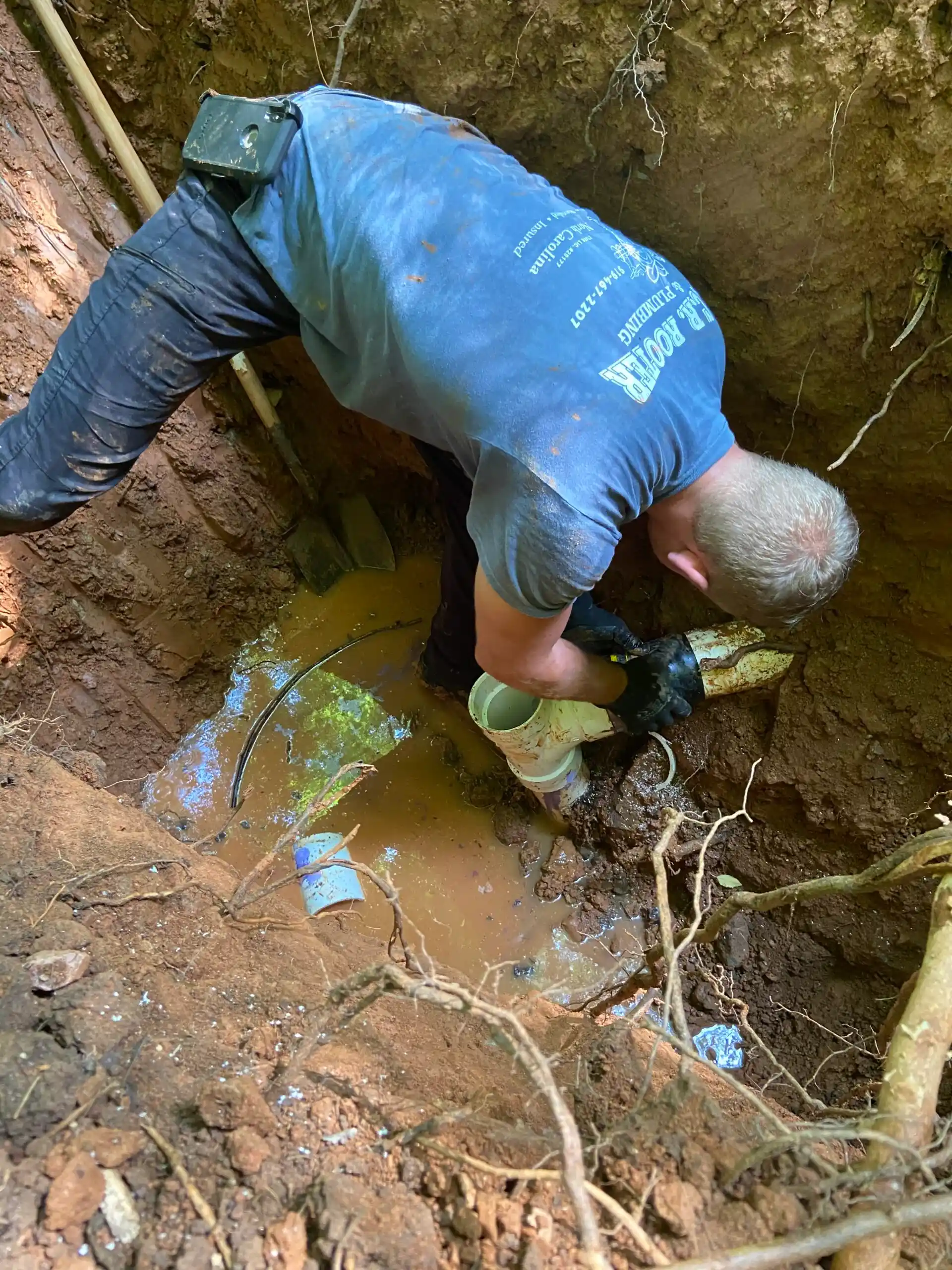
Tree root sewer damage is one of the most common problems homeowners face across the Raleigh Triangle. Roots are sneaky, persistent, and surprisingly strong. Because of this, they can wreck a sewer line before you ever notice a problem.
Many Raleigh-area homes sit near mature oaks, maples, and pines. Their roots stretch far underground in search of water. Therefore, your buried sewer pipe often becomes a target.
In this guide, we explain why roots invade sewer lines. Additionally, we share warning signs, prevention tips, and repair options. As a result, you can protect your plumbing system with confidence.
How Tree Roots Find Your Sewer Line
Tree roots crave moisture, oxygen, and nutrients. Your sewer line carries all three. Therefore, roots naturally grow toward it.
Even a tiny crack or loose joint creates an opening. Roots sense the moisture escaping into the soil. Then they push toward that source with surprising force.
The Vapor Trail Effect
Warm wastewater inside the pipe creates vapor. This vapor leaks through small gaps in cooler soil. As a result, roots follow the moisture trail straight to the source.
Once a root finds a crack, it slips inside. Then it grows larger over time. Meanwhile, the pipe damage gets worse.
Why Older Pipes Are More Vulnerable
Many older homes in Raleigh and Durham have clay or cast iron pipes. These materials crack and corrode over the years. Therefore, they offer easy entry points for roots.
Newer PVC lines resist roots better. However, no pipe is fully immune. Joints and seals can still loosen with age and ground movement.
Common Signs of Tree Root Sewer Damage
Root intrusion rarely happens overnight. Instead, the symptoms build slowly. Because of this, early detection makes a big difference.
Watch for these warning signs around your home or business:
- Slow drains that affect multiple fixtures at once
- Gurgling sounds from toilets or drains
- Frequent backups in tubs, sinks, or floor drains
- Foul sewer odors inside or outside the home
- Soggy spots or sinkholes in the yard
- Unusually lush, green grass over the sewer path
One slow drain might mean a simple clog. However, several slow drains often point to the main sewer line. Therefore, you should act quickly.
When to Call a Professional
Repeated backups signal a deeper issue. Meanwhile, a single plunge rarely solves root problems. As a result, you may need a camera inspection.
Our team uses in-line camera inspection to find the exact problem. Then we recommend the right fix. Contact the TCR Plumbing team to discuss your plumbing issue if you spot any of these signs.
Why the Raleigh Triangle Faces Higher Risk
The Triangle is known for its trees and green neighborhoods. That beauty comes with a hidden cost. Because of this, root intrusion is common here.
Communities like Apex, Cary, and Wake Forest feature plenty of mature landscaping. Older areas of Durham and Fuquay-Varina add aging pipes to the mix. Therefore, local sewer lines face real pressure.
Soil and Seasonal Factors
North Carolina’s clay-heavy soil holds moisture differently than sandy soil. During dry spells, roots search harder for water. As a result, they push toward leaking sewer pipes.
Seasonal shifts also move the ground. Soil expands and contracts with rainfall and drought. Then pipe joints loosen and crack over time.
Mature Trees Near the Home
Fast-growing trees pose the biggest threat. For example, willows, maples, and certain oaks spread roots aggressively. Therefore, planting them near sewer lines is risky.
If you have large trees close to your house, stay alert. Their roots may already be exploring your pipes. Meanwhile, regular inspections give you peace of mind.
How Plumbers Remove Tree Roots
Several proven methods clear roots from sewer lines. The right choice depends on the damage. First, a professional inspects the pipe.
Camera Inspection
A small waterproof camera travels through the line. It shows the exact root location and pipe condition. Therefore, no guesswork is involved.
This step guides every repair decision. Additionally, it prevents unnecessary digging. As a result, you save time and stress.
Hydro Jetting
Hydro jetting blasts roots with high-pressure water. It clears the blockage and scours the pipe walls. Moreover, it removes grease and buildup along the way.
This method works well for stubborn roots. However, it does not repair cracked pipes. Therefore, follow-up repairs may be needed.
Mechanical Augers
A powered auger cuts through invading roots. It restores flow quickly. However, roots often grow back if the crack remains.
Because of this, clearing alone is sometimes a short-term fix. Lasting results require sealing or replacing the pipe. The U.S. Environmental Protection Agency guide to caring for your system offers helpful background on protecting buried lines.
Repair and Replacement Options
Sometimes cleaning is enough for now. Other times, the pipe needs real repair. Therefore, an expert assessment matters.
Trenchless Repair
Trenchless methods fix pipes with minimal digging. A new liner forms inside the old pipe. As a result, your yard stays mostly intact.
This option suits many Triangle properties with landscaping. Moreover, it often takes less time than full excavation. However, not every pipe qualifies.
Full Pipe Replacement
Severely crushed pipes may need replacement. In that case, crews dig and install new piping. Then the system runs like new.
Modern PVC pipe resists root intrusion well. Therefore, replacement can prevent future problems. Our technicians help you weigh the choices.
How to Prevent Tree Root Sewer Damage
Prevention is far cheaper than emergency repair. Fortunately, a few smart habits help. First, know where your sewer line runs.
Use these practical tips to protect your pipes:
- Plant trees away from the sewer line path
- Choose slow-growing species with smaller root systems
- Schedule routine camera inspections every few years
- Fix small leaks before roots find them
- Avoid flushing grease that traps debris and roots
Regular maintenance keeps your system healthy. Additionally, early action stops minor issues from growing. As a result, you avoid costly surprises.
Know Your Property Layout
Before planting, locate your sewer line. A professional can map it during an inspection. Therefore, you plant with confidence.
This simple step protects new landscaping investments. Meanwhile, it shields your plumbing for years. Homeowners in Apex and Wake Forest find it especially useful.
Frequently Asked Questions
Can roots grow back after removal?
Yes, roots often return if the crack remains. Cleaning clears the blockage temporarily. However, sealing or replacing the pipe stops regrowth.
How do I know roots are in my sewer line?
Look for slow drains, gurgling, and frequent backups. Soggy yard spots are another clue. A camera inspection confirms the problem fast.
Are tree roots covered by homeowners insurance?
Coverage varies by policy and situation. Many plans exclude gradual root damage. Therefore, check your policy details with your provider.
How often should I inspect my sewer line?
An inspection every few years works for most homes. Older properties may need them more often. Additionally, inspect before planting near the line.
Is hydro jetting safe for my pipes?
Hydro jetting is safe for most pipes in good shape. However, fragile or damaged lines need careful evaluation first. A professional assessment guides the decision.
Protect Your Sewer Line Today
Tree root sewer damage rarely fixes itself. Instead, it grows worse with time. Therefore, early action saves money and stress.
TCR Plumbing has served the Raleigh Triangle since 1993. We handle drain cleaning, sewer lines, and camera inspections. Moreover, we offer 24/7 emergency service across Raleigh, Apex, Cary, and beyond.
Do not wait for a messy backup. Schedule service with our licensed, background-checked technicians. Explore your options today and keep your plumbing flowing strong.