
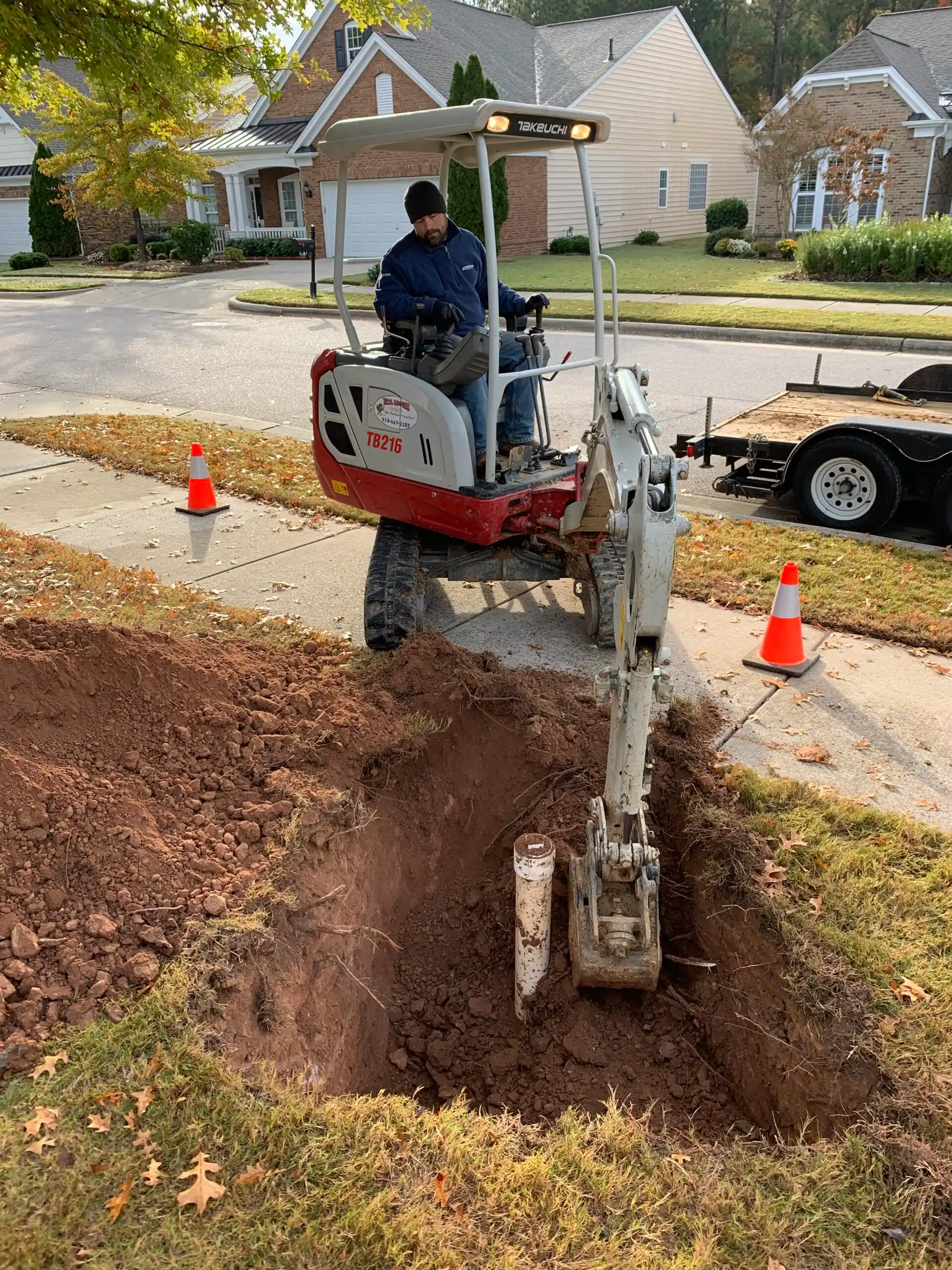
Does your older Raleigh-area home still hide outdated plumbing in the walls? If so, polybutylene pipe replacement may be one of the smartest upgrades you can make. Many homes built between the late 1970s and mid-1990s used this gray plastic piping.
Unfortunately, polybutylene pipe has a reputation for failing without warning. As a result, homeowners across the Raleigh Triangle face surprise leaks and water damage. Therefore, knowing what you have matters.
At TCR Plumbing, we have seen these systems firsthand for over 30 years. Below, we explain why this material is a concern. Additionally, we share how to spot it and what to do next.
What Is Polybutylene Pipe?
Polybutylene is a flexible plastic piping used widely from about 1978 to 1995. Builders chose it because it was cheap and easy to install. However, time revealed serious weaknesses.
The pipe is usually gray, though some versions appear blue or black. You often find it entering near the water heater or main shutoff. Additionally, it may run behind walls and under floors.
How to Recognize It in Your Home
First, check exposed plumbing in your basement, garage, or crawl space. Then look for these common signs:
- Gray plastic pipes around the water meter or heater
- Pipes marked with the code “PB2110”
- Plastic or copper crimp fittings at the joints
- Older construction dates between 1978 and 1995
Meanwhile, some pipe sits hidden inside walls. Because of this, a professional inspection often confirms what you cannot see.
Why Polybutylene Pipe Fails
Polybutylene reacts poorly to oxidants in public water. For example, chlorine slowly breaks down the pipe from the inside. As a result, the material becomes brittle over time.
Tiny cracks form first, then spread quietly through the system. Eventually, the pipe fails at a fitting or along its length. Therefore, leaks often appear suddenly and without warning.
The Hidden Risk of Sudden Leaks
Many failures start small and stay invisible for months. Moreover, hidden leaks can damage drywall, flooring, and framing. In addition, trapped moisture encourages mold growth.
On the other hand, a planned replacement removes that uncertainty completely. The U.S. Consumer Product Safety Commission has long noted concerns about this piping. You can read more through the Consumer Product Safety Commission for general background.
Why Replacement Matters in the Raleigh Triangle
The Triangle saw rapid growth during the polybutylene era. Therefore, many homes in Raleigh, Cary, and Apex contain this piping. Communities in Wake Forest and Durham share the same history.
Local water utilities treat water with chlorine for safety. However, that treatment also speeds up pipe breakdown. Because of this, replacement is especially relevant for area homeowners.
Protecting Your Property Value
Buyers and inspectors now recognize polybutylene as a red flag. As a result, this piping can complicate a home sale. Furthermore, some insurers ask about it before issuing coverage.
Replacing the pipe protects both your home and your investment. Additionally, it gives future buyers peace of mind. Therefore, many sellers upgrade before listing their property.
Modern Pipe Options That Replace Polybutylene
Today’s piping materials last far longer and resist chemical damage. When we replace polybutylene, we typically recommend proven modern options. Each one offers reliable performance for Triangle homes.
PEX Piping
PEX is a flexible, durable plastic used in most new homes. It resists chlorine well and installs with fewer joints. Therefore, it often means less wall damage during the upgrade.
Copper Piping
Copper remains a trusted, long-lasting choice for water lines. It handles heat well and stands up to time. However, it usually costs more than PEX.
CPVC Piping
CPVC is a rigid plastic rated for hot and cold water. Additionally, it resists corrosion and works in many homes. Our team helps you weigh each option clearly.
Explore your options with a licensed plumber before deciding. After all, the right material depends on your home and budget.
What the Replacement Process Looks Like
A full repipe sounds intimidating, but planning keeps it smooth. First, our technicians inspect your system and map the existing lines. Then we explain the scope and answer your questions.
Next, we protect your floors and access points carefully. After that, we install new piping and connect every fixture. Finally, we test the system and restore the work areas.
How Long Does It Take?
Timing depends on your home’s size and layout. Generally, a typical repipe takes a few days. Meanwhile, larger or commercial properties may need longer.
We keep water disruption as brief as possible. Moreover, we communicate each step along the way. Therefore, you always know what to expect.
Signs You Should Schedule an Inspection Soon
Not sure if your pipes need attention yet? Watch for these warning signs around your property:
- Frequent small leaks or pinhole drips
- Discolored or flaking pipe surfaces
- Reduced water pressure throughout the home
- Water stains on ceilings or walls
- Recurring repairs on the same plumbing lines
If you notice these issues, act sooner rather than later. Because of this, you can avoid costly emergency damage. Schedule service before a small problem becomes a flood.
Why Choose TCR Plumbing
Terry Ault founded T.C.R. Rooter & Plumbing in 1993. Since then, we have served homeowners and businesses across the Triangle. Our team brings over 30 years of hands-on experience.
We are licensed, bonded, and insured (#29177) with an A+ BBB rating. Additionally, our technicians are background-checked and drug-tested. Therefore, you can trust who enters your home.
We back all work with a 100% guarantee. Moreover, we offer 24/7 emergency service when you need it most. You can learn more about our full range of services on the TCR Plumbing website.
Frequently Asked Questions
Is polybutylene pipe still legal?
It is no longer used in new construction. However, existing pipe in older homes is not illegal. Still, replacement is strongly recommended due to failure risk.
How do I know if my home has it?
Look for gray plastic pipes near the water heater or meter. The code “PB2110” often appears on the pipe. When in doubt, request a professional inspection.
Will replacement damage my walls?
Some access points are usually needed during a repipe. However, skilled technicians minimize the impact. As a result, repairs to walls stay manageable.
Is replacement worth the cost?
For most homeowners, yes. Replacement prevents water damage, mold, and surprise leaks. Furthermore, it protects your property value over time.
Do you serve my community?
We serve Raleigh, Apex, Cary, Wake Forest, Fuquay-Varina, and Durham. Additionally, we cover many nearby Triangle communities. Just reach out to confirm your area.
Schedule Your Polybutylene Pipe Evaluation Today
Outdated piping puts your home at unnecessary risk. Therefore, replacing it brings real peace of mind. Our experienced team makes the process simple and stress-free.
Contact the TCR Plumbing team to discuss your plumbing issue. We will inspect your system and explain your options clearly. Finally, we will help you protect your Triangle home for years to come.