
Does your Raleigh Triangle home hide outdated pipes behind the walls? Many homeowners never think about it until trouble starts. Learning the polybutylene plumbing signs early can save you money and stress.
Polybutylene was a popular plumbing material decades ago. However, it became known for unexpected failures. As a result, knowing how to spot it matters for every homeowner.
At TCR Plumbing, we help families across Raleigh, Apex, and Cary identify risky pipes. Below, we explain what to look for and why it counts.
What Is Polybutylene Plumbing?
Polybutylene is a flexible plastic pipe used for water supply lines. Builders installed it widely from the late 1970s through the mid-1990s. Because of this, many older Triangle homes still have it today.
The material was cheap and easy to install. However, it had a major flaw. Over time, chemicals in treated water broke it down from the inside.
As a result, the pipes became brittle and cracked. Many homes faced sudden leaks and water damage. Therefore, identifying this pipe early is so important.
Why It Was So Common
During the building boom, polybutylene seemed like a smart choice. It was lighter than copper and faster to install. Moreover, it cost builders far less money.
Because of this, millions of homes received these pipes. Many of them sit right here in North Carolina. For example, neighborhoods built in the 1980s often contain it.
Common Polybutylene Plumbing Signs to Watch For
You can spot warning signs without opening your walls. First, check the visible pipes near your water heater. Next, look under sinks and in your basement or crawl space.
Polybutylene pipes have a distinct look. Usually, they appear gray, though some are blue or black. Additionally, they feel flexible rather than rigid like copper.
1. Gray or Blue Flexible Pipes
The color is often the easiest clue. Gray plastic pipes about half an inch wide are a red flag. However, blue versions also exist, especially on outdoor lines.
These pipes often connect with copper or plastic fittings. Furthermore, they may have stamped codes along the surface. Look for markings like “PB2110.”
2. Frequent or Mysterious Leaks
Recurring leaks signal trouble inside aging pipes. Polybutylene fails from within, so leaks can appear suddenly. Therefore, repeated repairs in the same area should worry you.
Meanwhile, you might notice damp spots on walls or ceilings. Also, watch for unexplained water stains. These often point to hidden pipe damage.
3. Reduced Water Pressure
Low water pressure can mean deteriorating pipes. As the material breaks down, mineral buildup and cracks restrict flow. As a result, your faucets feel weak.
However, low pressure has other causes too. Therefore, a professional inspection helps confirm the real issue. Our team checks each possibility carefully.
4. Discolored or Cloudy Water
Failing pipes sometimes affect water quality. You might see cloudy or slightly tinted water. Additionally, you may notice an odd taste.
This happens as the pipe degrades internally. Because of this, small particles enter your water supply. Then, your tap water looks or tastes off.
Where Polybutylene Pipes Hide in Your Home
These pipes can lurk in several places. First, check the main water line entering your home. Next, inspect supply lines feeding your fixtures.
Common locations include crawl spaces and basements. Also, look near your water heater connections. Finally, check outdoor service lines from the meter.
Inside Walls and Ceilings
Some pipes stay completely hidden behind drywall. Therefore, you cannot always see them. However, an in-line camera inspection reveals what you cannot.
Our experienced technicians use advanced tools for this. As a result, we locate hidden pipes without major demolition. This protects your home and your budget.
Outdoor Service Lines
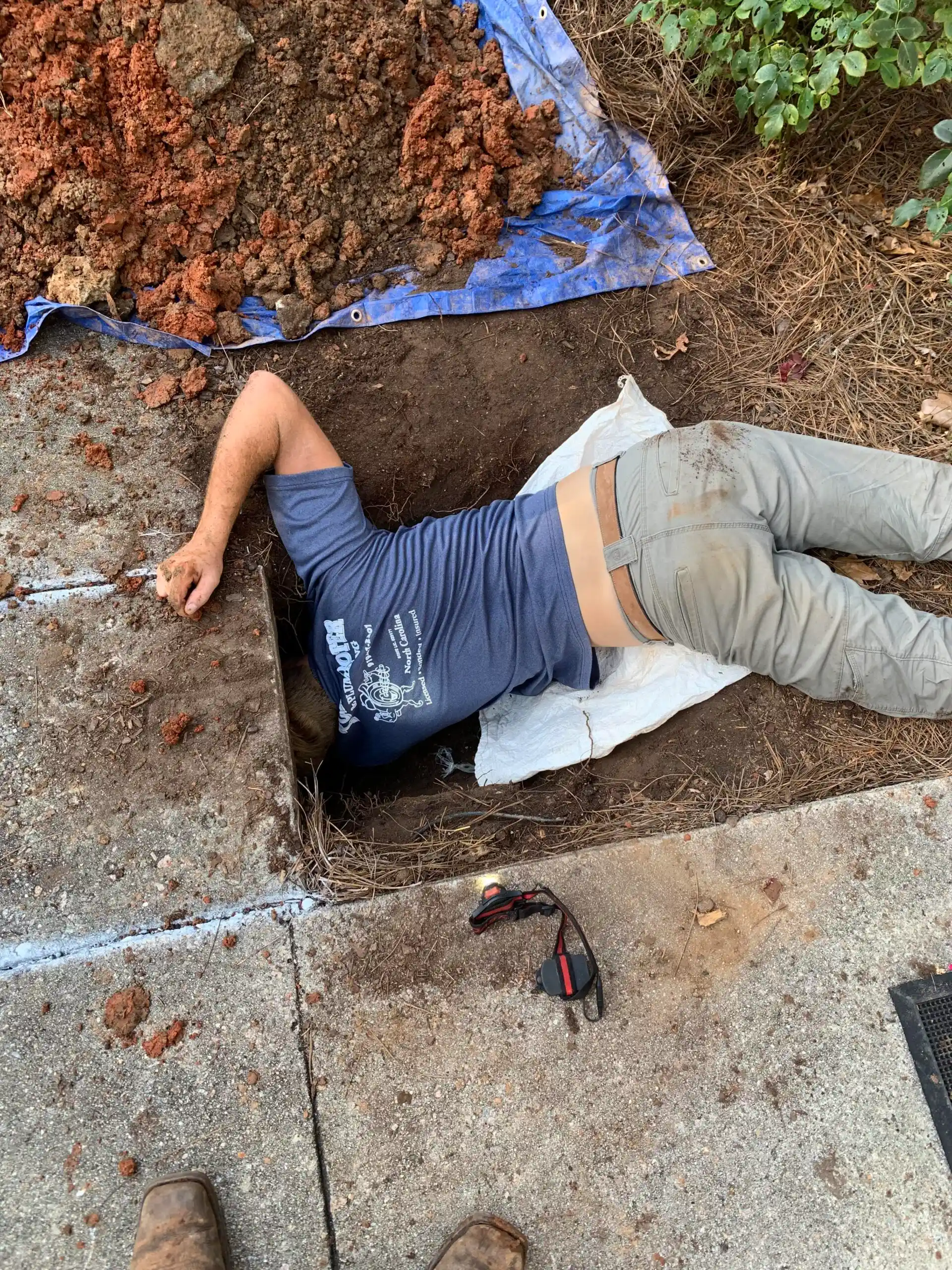
The buried line from your meter may be polybutylene too. These blue pipes were common outdoors. Meanwhile, they face soil pressure and shifting ground.
Because of this, underground failures can be costly. For example, a buried leak may go unnoticed for weeks. Therefore, professional leak detection helps protect your property.
Why Polybutylene Pipes Matter in the Raleigh Triangle
The Triangle has many homes built during the polybutylene era. Communities in Raleigh, Apex, and Wake Forest grew quickly back then. As a result, plenty of homes still contain these pipes.
North Carolina’s water treatment can speed up the breakdown. Chlorine and other chemicals react with the plastic over time. Therefore, local homes face real risks.
Homebuyers in Cary and Fuquay-Varina should stay alert too. During a home purchase, a plumbing inspection is wise. Additionally, sellers benefit from knowing what they have.
Insurance and Resale Concerns
Some insurers hesitate to cover polybutylene plumbing. Because of its failure history, they view it as risky. As a result, replacement may protect your coverage.
Moreover, these pipes can affect your home’s value. Buyers often request replacement before closing. Therefore, addressing the issue early helps your sale.
What to Do If You Find Polybutylene Plumbing
Do not panic if you spot these pipes. Many homes function for years before problems start. However, planning ahead protects you from surprises.
First, schedule a professional inspection. Next, discuss your options with a licensed plumber. Then, decide whether repair or replacement makes sense.
Repipe Options
Most experts recommend replacing polybutylene entirely. Modern materials like PEX and copper last much longer. Furthermore, they resist the chemical breakdown that doomed older pipes.
A full repipe sounds intimidating, but pros make it smooth. Our team works efficiently to limit disruption. As a result, you regain peace of mind quickly.
You can explore your repiping options with TCR Plumbing any time. We explain every step clearly and honestly. Therefore, you always know what to expect.
When to Act Quickly
Some situations demand fast action. For example, active leaks need immediate attention. Also, any sign of water damage should not wait.
We offer 24/7 emergency service across the Triangle. Therefore, help is available whenever you need it. Meanwhile, our background-checked technicians arrive ready to work.
How Professionals Confirm Polybutylene Plumbing
A trained plumber identifies these pipes with confidence. First, we examine visible plumbing throughout your home. Next, we check stamped codes and fitting types.
Additionally, we use camera inspection for hidden lines. This technology shows the pipe condition in real time. As a result, you get an accurate assessment.
You can learn more about this material from the U.S. Consumer Product Safety Commission. They documented widespread concerns about polybutylene over the years. Therefore, the risks are well established.
Frequently Asked Questions
Is polybutylene plumbing still legal?
Polybutylene is no longer used in new construction. However, existing pipes remain in many older homes. Therefore, replacement is recommended, not legally required.
How long does polybutylene last?
These pipes can last 10 to 15 years before issues appear. However, some fail sooner due to water chemistry. As a result, age alone does not guarantee safety.
Can I replace just part of my polybutylene system?
Partial repairs are possible but not ideal. Because the whole system shares the same flaw, full replacement works best. Therefore, most plumbers suggest a complete repipe.
Does polybutylene affect my home insurance?
It can complicate coverage with some providers. Many insurers view these pipes as high risk. Therefore, replacement may help you secure better policies.
How do I know if my Triangle home has it?
Check visible pipes for gray or blue flexible plastic. However, a professional inspection gives the clearest answer. Our team serves Raleigh, Apex, and nearby communities.
Protect Your Home Today
Polybutylene plumbing does not have to threaten your home. With early detection, you stay ahead of costly failures. Therefore, knowing the signs gives you real power.
Our family-owned team brings over 30 years of experience to every job. We are licensed, bonded, and insured with an A+ BBB rating. Moreover, we back all work with a 100% guarantee.
Ready to know what is behind your walls? Contact the TCR Plumbing team to discuss your plumbing concerns. We proudly serve Raleigh, Apex, Cary, Wake Forest, and beyond.