
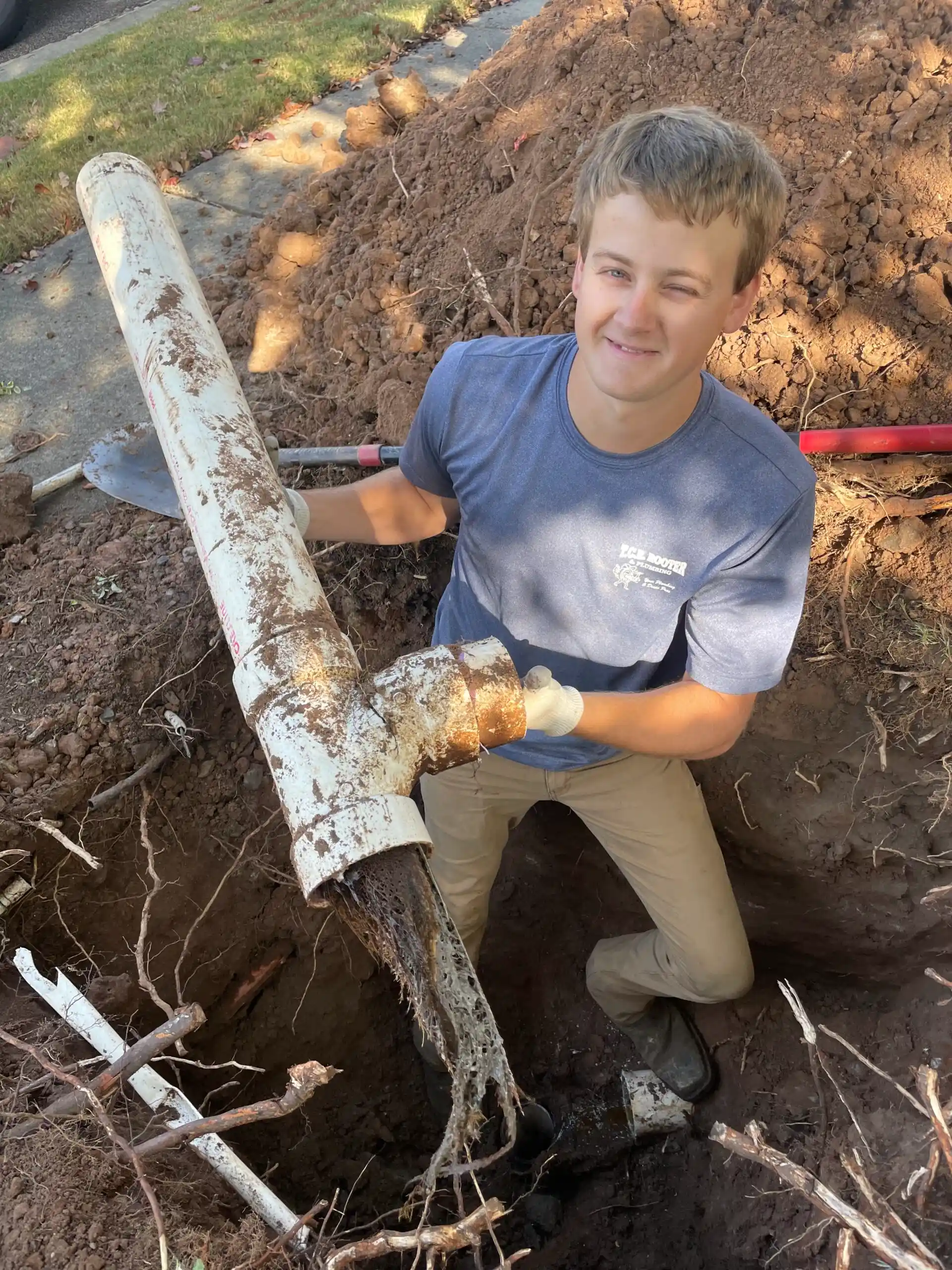
A failing sewer line can turn your day upside down fast. When you compare trenchless vs traditional sewer replacement, the right choice depends on your property, budget, and pipe condition. Understanding both methods helps you make a smart decision.
At TCR Plumbing, we have repaired and replaced sewer lines across the Raleigh Triangle since 1993. Therefore, we know how local soil, mature trees, and older homes affect your options.
Below, we break down each method in plain language. As a result, you can feel confident before any work begins.
Understanding Sewer Line Replacement Basics
Your sewer line carries waste from your home to the city main or septic system. Over time, pipes crack, sag, or collapse. When that happens, replacement often becomes necessary.
First, a plumber inspects the line with a camera. Next, the technician locates the damage and measures its severity. Then, you and your plumber choose a repair method.
Common Signs of Sewer Trouble
Many homeowners ignore early warning signs. However, catching problems early saves money and stress.
- Slow drains throughout the house
- Frequent backups or gurgling sounds
- Foul odors near drains or in the yard
- Soggy patches or sinkholes in the lawn
- Unusually green or lush grass over the line
If you notice these signs, act quickly. Because of this, you can avoid a full collapse and emergency repairs.
Traditional Sewer Replacement Explained
Traditional replacement uses open-trench excavation. In other words, crews dig a trench along the entire damaged line. Then, they remove the old pipe and install a new one.
This method has served homeowners for decades. Moreover, it remains reliable for badly collapsed or severely misaligned pipes.
Advantages of the Traditional Method
Open-trench work offers some clear benefits. For example, it allows full visual access to the entire pipe.
- Works for completely collapsed or crushed pipes
- Allows full pipe replacement, not just lining
- Useful when rerouting the line entirely
- Lower equipment costs in some simple cases
Drawbacks to Consider
Traditional digging also creates real challenges. Meanwhile, the disruption can affect your whole yard.
- Tears up lawns, driveways, and landscaping
- Takes longer to complete the job
- Often requires restoration of hardscapes
- Can disturb mature trees common in older Raleigh neighborhoods
In historic areas near downtown Raleigh or established parts of Durham, this matters. Therefore, many owners weigh the cleanup cost carefully.
Trenchless Sewer Replacement Explained
Trenchless methods repair pipes with little or no digging. Instead of a long trench, crews use one or two small access points. As a result, your yard stays mostly intact.
Two main trenchless techniques exist today. Both rely on modern equipment and precise camera work.
Pipe Lining (CIPP)
Cured-in-place pipe lining inserts a resin-coated liner into the old pipe. Then, the liner hardens to form a new pipe inside the old one. This works well for pipes with cracks or small breaks.
Furthermore, lining seals out tree roots and minor leaks. It also smooths the interior, which improves flow.
Pipe Bursting
Pipe bursting pulls a new pipe through the old one. Meanwhile, a bursting head breaks the old pipe outward. This method replaces severely damaged lines without a full trench.
Additionally, pipe bursting can upsize the line for better capacity. Because of this, it suits growing households or busy commercial sites.
Advantages of Trenchless Work
Trenchless repair appeals to many Triangle homeowners. For example, it protects landscaping and saves time.
- Minimal digging and disruption
- Faster completion in many cases
- Preserves driveways, patios, and gardens
- Often longer-lasting, durable pipe materials
- Less yard restoration afterward
When Trenchless May Not Work
Trenchless methods are not always possible. However, an inspection reveals whether your line qualifies.
- Completely collapsed pipes may block the liner
- Severe misalignment can prevent insertion
- Some local codes affect method choices
Comparing Cost, Time, and Disruption
Cost depends on many factors. These include pipe length, depth, soil, and access. Therefore, we avoid one-size-fits-all numbers.
Generally, traditional digging can cost less in equipment but more in restoration. On the other hand, trenchless work may cost more upfront but save on yard repairs.
Time on the Job Site
Traditional projects often take several days. Trenchless jobs frequently finish faster. As a result, your household returns to normal sooner.
Long-Term Value
Both methods last many years when done correctly. Moreover, modern trenchless materials resist corrosion and root intrusion. For homes in Cary, Apex, and Wake Forest with mature oaks, that benefit matters.
If you want help weighing the options, our team can walk you through them. Contact the TCR Plumbing team to discuss your plumbing issue and explore the best fit for your property.
Why Local Conditions Matter in the Raleigh Triangle
Triangle soil and tree cover shape every sewer project. Clay-heavy soils shift over time, which stresses old pipes. Meanwhile, large root systems crack aging clay or cast-iron lines.
Older neighborhoods in Raleigh and Durham often have decades-old sewer pipes. Therefore, these homes face higher risk of failure.
Permits and Inspections
Most sewer work requires permits and inspections. Local rules vary across Wake and Durham counties. Because of this, hiring a licensed local plumber keeps your project compliant.
You can also learn more about sewer system basics from the EPA septic and sewer resources. This helps you understand how your waste system protects public health.
Growing Communities Bring New Challenges
Fast growth in Apex, Fuquay-Varina, and Wake Forest adds pressure to older lines. New construction nearby can disturb existing pipes. Therefore, regular inspections help you catch problems early.
How TCR Plumbing Approaches Sewer Replacement
We start every job with a camera inspection. First, we find the exact damage. Next, we explain your options clearly. Then, we recommend the method that fits your needs.
Our technicians are background-checked and drug-tested. Additionally, we are licensed, bonded, and insured. We back all work with a 100% guarantee.
Honest Recommendations
We never push one method over another for profit. Instead, we match the solution to your pipe and property. As a result, you get fair, respectful service every time.
Ready to move forward? Schedule service with our experienced team and get a clear plan for your sewer line.
Frequently Asked Questions
How do I know if I need trenchless or traditional replacement?
A camera inspection answers this question best. If your pipe is intact enough, trenchless often works. However, fully collapsed lines may require traditional digging.
Is trenchless sewer replacement always more expensive?
Not always. Trenchless can cost more upfront. However, it often saves money on landscaping and hardscape restoration.
How long does sewer replacement take?
Trenchless jobs often finish in a day or two. Traditional projects can take several days. Site conditions affect the timeline.
Will my yard be destroyed during the work?
Trenchless methods minimize yard disruption. Traditional digging affects more of your lawn. Therefore, many homeowners prefer trenchless when possible.
Does TCR Plumbing serve my area?
Yes. We serve Raleigh, Apex, Cary, Wake Forest, Fuquay-Varina, Zebulon, and Durham. We also offer 24/7 emergency service.
Get Expert Sewer Line Help Today
Choosing between trenchless and traditional methods feels overwhelming. However, the right plumber makes it simple. With over 30 years in the Triangle, we guide you every step.
Do not wait for a small problem to become a major repair. Instead, act early and protect your home or business.
Explore your options with TCR Plumbing. Call us today or request service, and let our licensed team restore your sewer line with confidence.