
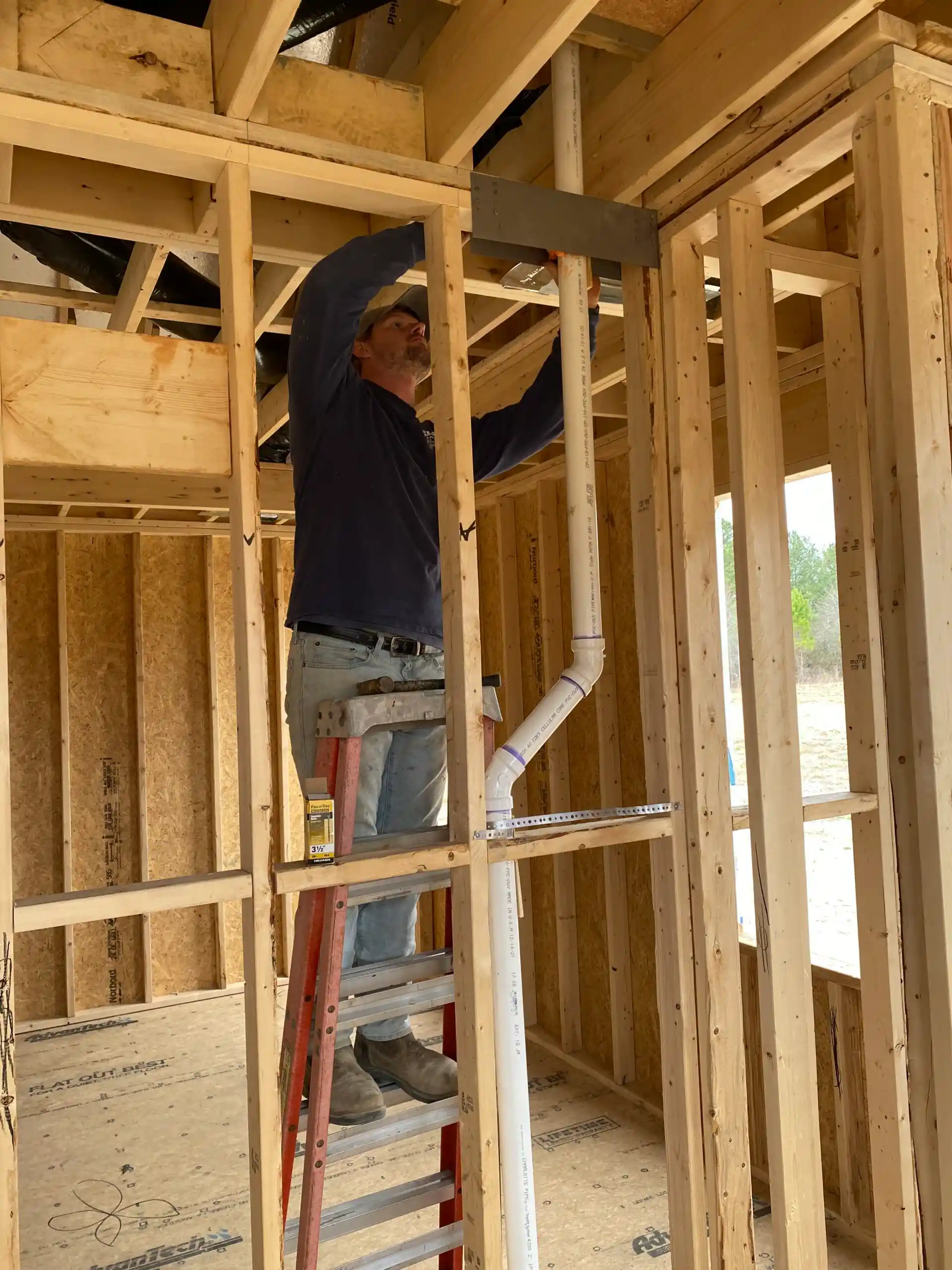
If your Fuquay-Varina home was built between the late 1970s and mid-1990s, you may have hidden risks in your walls. Many homes from that era used polybutylene piping. Because of this, polybutylene pipe replacement has become a common project across the Raleigh Triangle.
These gray plastic pipes were once popular and affordable. However, they can fail without warning over time. As a result, homeowners often face leaks, water damage, and stress.
At TCR Plumbing, we help Fuquay-Varina families understand their options. Additionally, we make the repiping process clear and manageable. This guide explains what you need to know.
What Is Polybutylene Piping?
Polybutylene, often called “poly,” is a flexible plastic used for water supply lines. Builders installed it widely because it was cheap and easy to work with. Meanwhile, few people knew about its long-term flaws.
The pipes are usually gray, though some appear blue or black. Typically, you will find them entering near the water heater or main shutoff. Also, they connect at fittings inside walls and ceilings.
Why Polybutylene Fails
Over time, chlorine in city water reacts with the pipe material. As a result, the plastic becomes brittle and weak. Then it can crack or split under normal water pressure.
The fittings and joints often fail first. However, the pipes themselves can also degrade from the inside out. Because these failures happen internally, you rarely see them coming.
Signs You May Have Polybutylene Pipes
Many Fuquay-Varina homeowners do not know what runs behind their walls. Therefore, a quick inspection helps. First, check the pipe entering your water heater or main valve.
Here are common warning signs to watch for:
- Gray or dull plastic pipe near the water meter or heater
- Unexplained leaks around fittings or walls
- Water stains on ceilings or drywall
- Reduced water pressure throughout the home
- Frequent small repairs to your supply lines
If you notice any of these, act quickly. Meanwhile, avoid ignoring small drips. Small leaks often signal bigger problems ahead.
When Was Your Home Built?
Age is a strong clue. For example, homes built between 1978 and 1995 are prime candidates. Many neighborhoods in Fuquay-Varina, Apex, and Cary fall into this range.
If you bought an older home recently, ask about the plumbing history. Additionally, a professional inspection removes the guesswork. Because of this, you gain peace of mind.
Why Replacement Is Better Than Repair
Some homeowners hope to patch a bad section. However, spot repairs rarely solve the real problem. The rest of the system remains just as fragile.
Once poly starts failing, more failures usually follow. Therefore, full repiping offers a lasting solution. As a result, you avoid repeated repairs and water damage.
The Cost of Waiting
A single burst pipe can flood a room fast. Furthermore, water damage leads to mold, ruined flooring, and higher bills. Meanwhile, insurance claims can grow complicated.
Replacing the system now often costs less over time. In addition, it protects your home value. Buyers in the Raleigh Triangle increasingly ask about polybutylene before purchase.
The Polybutylene Pipe Replacement Process
Repiping sounds overwhelming, but a skilled team keeps it smooth. First, we inspect your entire plumbing system. Next, we map out every supply line that needs replacing.
Then we choose the right modern material. Most homeowners select PEX or copper piping. Both options last far longer than polybutylene.
Modern Pipe Materials
PEX is flexible, durable, and resistant to chlorine damage. Because of this, it works well for whole-home repiping. Additionally, PEX installs faster and with fewer joints.
Copper remains a trusted, long-lasting choice. However, it usually costs more and takes longer to install. Our team helps you weigh both options clearly.
What to Expect During the Job
We work efficiently to limit disruption. First, we protect your floors and furniture. Then we access the lines through small, planned openings.
Next, we install the new piping and connect your fixtures. After that, we test everything for leaks and pressure. Finally, we clean up and walk you through the results.
Serving Fuquay-Varina and the Raleigh Triangle
TCR Plumbing has served the Triangle since 1993. Therefore, we understand the older neighborhoods here well. Many homes in Fuquay-Varina share the same plumbing history.
We also help homeowners in Apex, Cary, Wake Forest, and Durham. Because we know the region, we work quickly and accurately. As a result, your project stays on track.
Why Local Experience Matters
Local water conditions affect how pipes age. Furthermore, permit rules vary across Wake County communities. Our team handles these details for you.
We are licensed, bonded, and insured under #29177. Additionally, we hold an A+ BBB rating. Because of this, you get trusted, professional service every time.
How to Prepare for a Repipe
A little planning makes the process easier. First, clear space around your water heater and main valve. Then move items away from bathroom and kitchen walls.
Consider these simple steps before we arrive:
- Identify any known problem areas or past leaks
- Clear access to closets, cabinets, and crawl spaces
- Plan for short water shutoffs during work
- Ask questions about materials and timelines
Meanwhile, feel free to raise any concerns. We answer questions openly and honestly. Also, we explain each step in plain language.
After the Replacement
Once we finish, your new system needs little maintenance. However, watch for any unusual sounds or pressure changes. If something seems off, call us right away.
Modern piping should serve your home for decades. Therefore, you can relax knowing the risk is gone. Additionally, you may see steadier water pressure and cleaner water.
Frequently Asked Questions
How do I know if I have polybutylene pipes?
Look for gray, blue, or black plastic pipe near your water heater or meter. However, some lines hide inside walls. Therefore, a professional inspection is the safest way to confirm.
Is polybutylene pipe replacement worth it?
Yes, in most cases it protects your home from sudden failures. Furthermore, it can boost resale value. Buyers in the Triangle often expect updated plumbing.
How long does a repipe take?
Most homes take a few days, depending on size and layout. Meanwhile, we work to limit water shutoff time. Additionally, we keep your daily disruption low.
Will replacement damage my walls?
We access lines through small, planned openings. However, some patching is usually needed afterward. As a result, the work stays neat and manageable.
What material should I choose?
PEX and copper both outlast polybutylene by far. However, the best choice depends on your budget and home. Our team helps you decide with clear guidance.
Protect Your Fuquay-Varina Home Today
Polybutylene pipes are a ticking clock in many older homes. However, you do not have to wait for a failure. Instead, take control with a professional inspection.
TCR Plumbing brings over 30 years of trusted experience to your project. Additionally, we back all work with a 100% guarantee. Because of this, you can feel confident every step of the way.
Ready to explore your options? Contact the TCR Plumbing team to schedule service and discuss your repiping needs. Finally, protect your home before a small leak becomes a big problem.